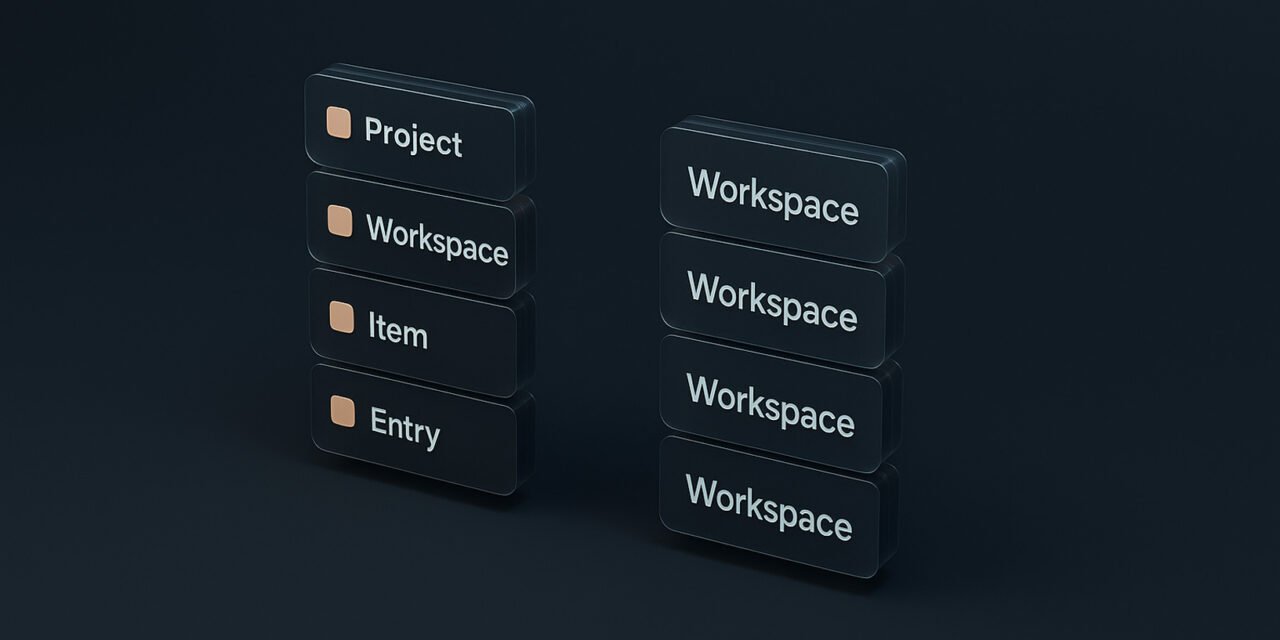
Consistency builds confidence. When your writing uses different words for the same thing, readers slow down to check whether the product changed or the meaning shifted. Calling one feature a record in one place and an entry in another introduces unnecessary effort that does not need to exist. Consistent terms give your content structure and help users move through it without second guessing.
Why It Matters for Product Teams
Inconsistent terminology creates confusion across product, documentation, and support. If the UI says Project but the docs say Workspace, users question whether they are looking at the same feature or something new.
Consistency keeps teams aligned around a shared mental model. It reduces localisation issues, shortens review cycles, and reinforces a clear product voice.
How to Apply It
Start with a single source of truth for terms. This can be a terminology guide, an existing UX copy glossary, or something as simple as a shared list that everyone agrees to use. What matters is that everyone uses it.
Use the same word for the same concept across UI copy, documentation, release notes, and support content.
Avoid near synonyms for core concepts. Pairs like project and workspace or record and item introduce ambiguity even if they feel interchangeable.
When terminology changes, update every reference at the same time. Partial renames leave old and new language coexisting, which confuses users more than the original term ever did.
Examples
Not Effective: Add the item to your project, then open the workspace to manage it.
Effective: Add the item to your project, then open the project dashboard to manage it.
Not Effective: Create a record, then update the entry to save changes.
Effective: Create a record, then update the record to save changes.
Consistent terminology locks meaning in place. When language stays stable, users can focus on using the product instead of decoding it.