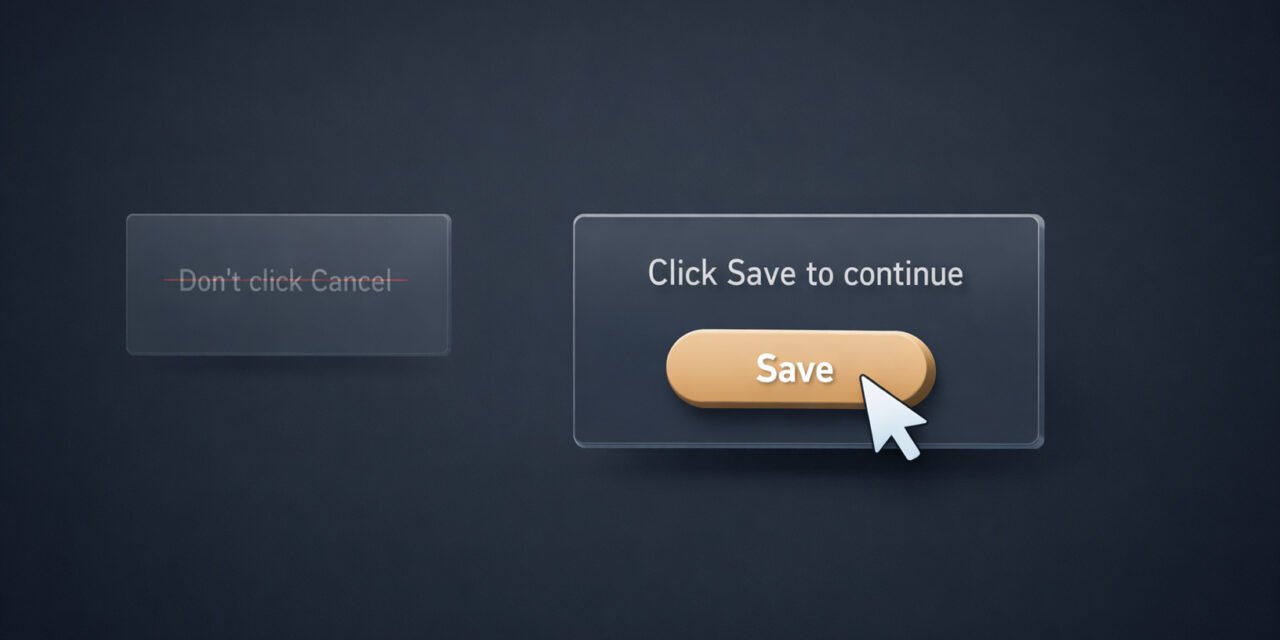
Good writing gives direction. Instead of describing what not to do or what might happen, it tells readers exactly what should happen. Positive phrasing keeps instructions direct and actionable, helping users focus on success rather than avoiding failure.
Why It Matters for Product Teams
Negative phrasing creates hesitation. “Don’t click Cancel” forces the reader to pause and translate the instruction before acting. That moment of doubt is where errors happen.
Clear, positive instructions move users forward with confidence. They reduce cognitive load, clarify intent, and make interfaces and documentation feel more approachable. For product teams, this shows up as interfaces that guide users with clear direction, documentation that answers questions before they turn into tickets, and flows that feel intentional rather than defensive.
How to Apply It
Write the action you want the reader to take, not the mistake you want them to avoid. Replace negative phrasing like don’t, never, or avoid with clear positive direction that states the desired outcome. Lead with the next step or action, not the potential failure. Use assertive verbs that imply progress and completion, such as Select, Confirm, Complete, or Save.
Examples
Not Effective: Don’t close the browser before the upload completes.
Effective: Keep the browser open until the upload completes.
Not Effective: Avoid pressing Reset while updating the firmware.
Effective: Wait for the firmware update to finish before pressing Reset.
Write what you want to happen. Positive language guides readers toward the right outcome instead of making them navigate around mistakes.