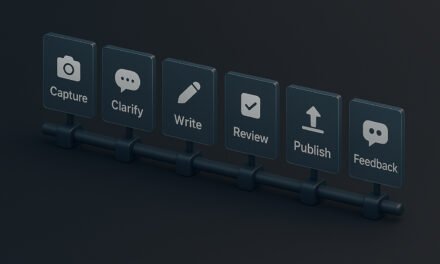
Most teams think the work ends when release notes ship. In reality, that is when the most useful signals start to appear.
Release notes are not a one-time writing task. Improving release notes over time means treating them as a place where clarity, confusion, and expectations show up in real time. Teams that improve at release notes over time are not better writers. They are better at noticing what happens after a release goes live.
Why improving release notes is an ongoing practice
Products change faster than writing habits, and as features evolve, audiences shift with them.
People who followed a change as it was built carry a lot of context. They saw earlier versions, heard the reasoning behind decisions, and adapted gradually as the product evolved. When a release note is a little vague, they can usually fill in the gaps without much extra effort or uncertainty.
People encountering the change for the first time do not have that context. They did not see what came before and experience the change all at once, so missing explanation shows up immediately as confusion rather than something they can reason through.
What felt clear to one group six months ago often becomes confusing to another without anyone noticing.
Release notes rarely fail in obvious ways. They do not usually trigger immediate complaints. Instead, they create small pockets of confusion and extra explanation that surface elsewhere, such as in support conversations, onboarding calls, or internal explanations that keep changing depending on who is asked.
Release notes do not fail loudly. They fail through downstream confusion.
Teams that never revisit their release notes style slowly accumulate this confusion. Teams that do improve treat release notes as something that evolves alongside the product.
The signals teams already have but often ignore
Improvement does not require new tools or dashboards. The most useful signals already exist, but they are not always interpreted as feedback on communication.
Support and customer questions
Support teams often become translators for unclear release notes, which becomes visible when the same questions appear repeatedly after a release. Or when users paraphrase the release note back to support in slightly different language. Or when tickets focus less on bugs and more on understanding what changed.
These questions are not just support issues or routine follow ups. They are evidence that the release note did not fully answer the questions people had when they first encountered the change.
Product and onboarding friction
Some features require more explanation than expected.
Demos restate information that was already “announced.” Enablement materials fill gaps that release notes skipped. New users struggle with changes that existing users adapted to gradually.
When onboarding absorbs this extra explanation, it often goes unnoticed. But it is still a signal. The release note described what changed, but not what it meant.
Internal confusion
Internal teams feel the impact first, especially teams like sales, support, customer success, and onboarding who have to explain changes to users in real conversations.
When these teams ask product how to explain a change, it usually means the release note did not give them enough confidence. When explanations vary by person or release notes are never referenced internally, it signals missing context and unclear intent.
If internal teams cannot clearly articulate a change, users will not either.
How to review release notes without creating overhead
Reviewing release notes does not mean line editing old posts or adding another step in the process.
Effective review is lightweight and pattern based. It looks across multiple releases, not at a single paragraph. It connects release notes to what happened afterward, not just how they read in isolation.
Useful questions sound like:
- What did people misunderstand repeatedly
- Which parts required follow-up explanations
- Where did the change behave differently than people expected once they started using it?
The goal is not to polish language. It is to notice where people lacked the context they needed to understand the change.
Iteration beats polish
Some teams spend a long time perfecting individual release notes, while others make small adjustments every release. The second group improves faster.
Clarity compounds when teams notice patterns and respond to them, whether that means adding a sentence to explain impact, reordering a paragraph to lead with intent, or replacing a recurring phrase with something more concrete.
These changes are rarely noticeable on their own, but over time they reduce the need for explanation elsewhere.
The goal is not perfect release notes. The goal is fewer explanations later.
What improvement looks like over time
Early stage release notes often focus on listing changes, while more mature teams explain why those changes exist and who they affect. Over time, they anticipate questions before users ask them. Large updates include pointers to deeper context. Smaller changes are framed in terms of everyday workflows.
Nothing about this progression is sudden. It happens because teams pay attention to confusion and treat it as feedback instead of noise, learning from each release rather than trying to fix everything in one rewrite.
Clarity compounds when teams treat communication as part of the product itself, not something bolted on after the work is done.